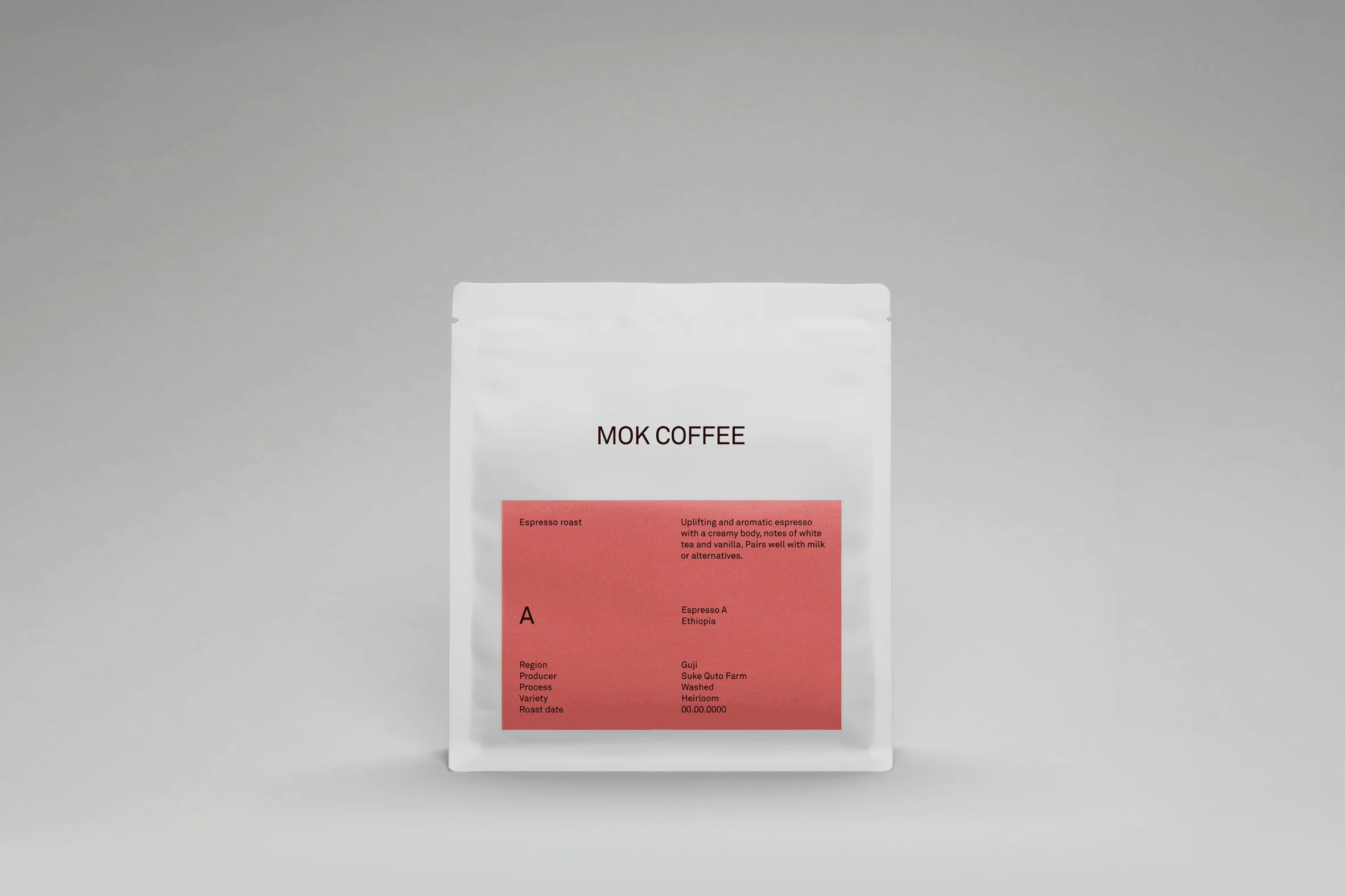
Espresso A, Ethiopia
Tesfaye Bekele is a pioneer of modern Guji coffee. About 15 years ago, when he was at the head of the Natural resources and Environment Protection Department in Guji, heavy fires broke out that destroyed large parts of the Guji forests and farms. The area turned into a desert, fauna and flora was gone. Aware of the fertile properties of the region, Tesfaye saw it as his duty to bring back life to the high lands and valleys of Guji and he proposed coffee seedlings to the farmers to be planted amongst other native trees for variation. Regarding the time it takes for coffee plants to bear cherries (at least 3 years), the community showed little interest in this solution. Tesfaye decided to lead by example, quit working for the government and bought a land, the Suke Quto Farm, which he then replanted. When the other farmers saw the results, they followed and started growing their own coffee with Tesfaye’s seedlings.
This lot from Tesfaye’s Suke Quto Farm is floral and sweet and fits perfectly in our Espresso A series. It was processed at the Suke Quto Washing Station, where it was depulped with the mucilage left on and fermented for 35 to 48 hours. All wastewater is then stored in lagoons and parchment is dried on raised beds until the desired humidity is reached.
This coffee is sourced through our importing partner Trabocca.
More Images
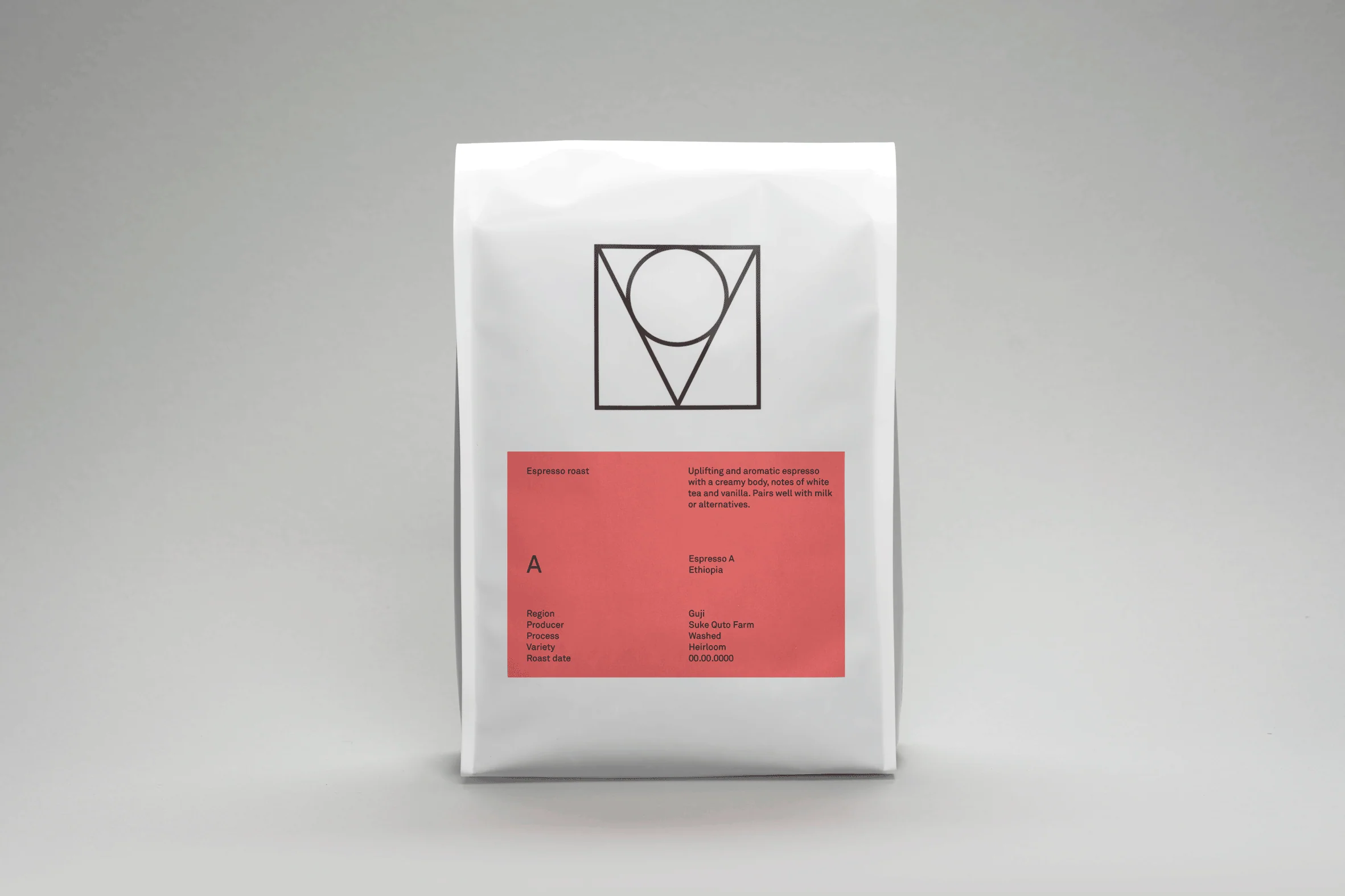
Espresso A, Ethiopia
Tesfaye Bekele is a pioneer of modern Guji coffee. About 15 years ago, when he was at the head of the Natural resources and Environment Protection Department in Guji, heavy fires broke out that destroyed large parts of the Guji forests and farms. The area turned into a desert, fauna and flora was gone. Aware of the fertile properties of the region, Tesfaye saw it as his duty to bring back life to the high lands and valleys of Guji and he proposed coffee seedlings to the farmers to be planted amongst other native trees for variation. Regarding the time it takes for coffee plants to bear cherries (at least 3 years), the community showed little interest in this solution. Tesfaye decided to lead by example, quit working for the government and bought a land, the Suke Quto Farm, which he then replanted. When the other farmers saw the results, they followed and started growing their own coffee with Tesfaye’s seedlings.
This lot from Tesfaye’s Suke Quto Farm is floral and sweet and fits perfectly in our Espresso A series. It was processed at the Suke Quto Washing Station, where it was depulped with the mucilage left on and fermented for 35 to 48 hours. All wastewater is then stored in lagoons and parchment is dried on raised beds until the desired humidity is reached.
This coffee is sourced through our importing partner Trabocca.
Product Information
Product Information
Shipping & Returns
Shipping & Returns
Description
Tesfaye Bekele is a pioneer of modern Guji coffee. About 15 years ago, when he was at the head of the Natural resources and Environment Protection Department in Guji, heavy fires broke out that destroyed large parts of the Guji forests and farms. The area turned into a desert, fauna and flora was gone. Aware of the fertile properties of the region, Tesfaye saw it as his duty to bring back life to the high lands and valleys of Guji and he proposed coffee seedlings to the farmers to be planted amongst other native trees for variation. Regarding the time it takes for coffee plants to bear cherries (at least 3 years), the community showed little interest in this solution. Tesfaye decided to lead by example, quit working for the government and bought a land, the Suke Quto Farm, which he then replanted. When the other farmers saw the results, they followed and started growing their own coffee with Tesfaye’s seedlings.
This lot from Tesfaye’s Suke Quto Farm is floral and sweet and fits perfectly in our Espresso A series. It was processed at the Suke Quto Washing Station, where it was depulped with the mucilage left on and fermented for 35 to 48 hours. All wastewater is then stored in lagoons and parchment is dried on raised beds until the desired humidity is reached.
This coffee is sourced through our importing partner Trabocca.